Share kit — copy + paste into your own account. Every draft credits Mathematica and IMLS. Images are ready for Instagram (1080×1080). If you cross-post, tag the study link so the click goes to the source.
LinkedIn thread · 7 posts · stakeholder voice
Post 1 of 7255 chars
New research from Mathematica and IMLS just mapped how public libraries build early readers—across 50 grants in 24 states. The findings challenge us to think bigger about staff training, caregiver partnership, and ecosystem roles. Here's what stood out. 🧵
Post 2 of 7284 chars
RQ1: How do we measure *engaged* reading at different ages? 63% of manuscripts tackled this. Libraries track outcomes differently for infants (songs/storytime), toddlers (music-movement), and preschoolers (play groups). Developmental context matters—storytime isn't one-size-fits-all.
Post 3 of 7296 chars
RQ2: What works? 74% of manuscripts explored best practices. Among the 50 grants analyzed, 32% invested in training library staff—the single most common activity. Summer reading (26%) and expanded collections (22%) followed. Infrastructure investments? Only 6%. We're underfunding the foundation.
Post 4 of 7281 chars
RQ3: How do caregivers and kids use library resources together? 66% of manuscripts examined this. Programs like Georgia's Take 5 surveyed caregivers on reading readiness; Alaska's Raven Reads tracked home reading time. The library visit is a spark—what happens at home is the fire.
Post 5 of 7322 chars
RQ5: Where does the library fit in a literacy ecosystem? 93% of manuscripts addressed this—the highest coverage. Libraries operate as resource hubs, direct service providers, and conveners. Colorado's Growing Readers Together gave caregivers milestone guides; Rhode Island partnered teachers with summer reading materials.
Post 6 of 7280 chars
RQ6: Do engagement patterns differ by community or infrastructure? Zero manuscripts answered this—a critical gap. We have no secondary-source evidence on how library type, funding, or demographics shape which kids engage. That's the question for the next wave of primary research.
Post 7 of 7372 chars
This isn't a prescriptive playbook—it's a landscape scan of what's been studied and where the gaps are. 336 manuscripts screened, 84 prioritized. Read the full report by Lugo-Gil, Walzer, Herring, and Malone: https://www.imls.gov/research-evaluation/evaluations-research-studies/child-reading-literacy-and-public-libraries-secondary-research. Credit: Mathematica and IMLS.
X / Twitter thread · 10 tweets · research voice
Tweet 1 of 10175 chars
New from @mathematica and @US_IMLS: How do public libraries engage early readers? 50 grants, 24 states, 84 manuscripts. Here's what the evidence shows—and where it's silent. 🧵
Tweet 2 of 10160 chars
Methodology: 336 manuscripts screened → 98 prioritized → 84 final. Plus 50 grant narratives (18 discretionary, 32 Grants-to-States). Coverage window: 2013–2024.
Tweet 3 of 10214 chars
RQ1 (63% coverage): Engagement looks different by age. Infants: songs/storytime. Toddlers: music-movement. Preschool: play groups. Programs like MA's Strength in Families matched activities to developmental stages.
Tweet 4 of 10184 chars
RQ2 (74% coverage): Among 50 grants, top activities: Training library staff (32%), Summer reading (26%), Expanded collections (22%), Caregiver resources (20%). Infrastructure? Just 6%.
Tweet 5 of 10172 chars
Example: Arizona's Building a New Generation of Readers gave librarians the chance to complete an Early Childhood literacy certificate. Staff development = service quality.
Tweet 6 of 10242 chars
RQ3 (66% coverage): How do kids + caregivers use library resources together? GA's Take 5 surveyed caregivers on reading readiness. AK's Raven Reads tracked at-home reading time. The library visit sparks habits that extend beyond the building.
Tweet 7 of 10241 chars
RQ5 (93% coverage—highest): Libraries play 3 roles in literacy ecosystems: resource hub, direct service provider, convener. RI's Kids Read Across gave teachers resource guides to integrate summer reading into classrooms. Partnership = reach.
Tweet 8 of 10163 chars
RQ4 (digital/online resources): 24% coverage. RQ6 (patterns by community/infrastructure): 0% coverage. These gaps point to where primary research needs to go next.
Tweet 9 of 10213 chars
Named programs in the corpus: CA Summer @ Your Library, CO Growing Readers Together, PA bookmobile, WA Stillaguamish furniture investment, multi-state Prime Time Family Reading. Diversity of approaches = strength.
Tweet 10 of 10212 chars
Full report by Lugo-Gil, Walzer, Herring, Malone: https://www.imls.gov/sites/default/files/2026-03/LibraryChildLiteracySecondaryResearch.pdf. Credit: Mathematica + IMLS. This is the landscape. Now we build on it.
Instagram carousel · 10 slides · 1080×1080 · parent voice
Does Your Library Build Readers?
New research from Mathematica and IMLS just mapped how 50 library programs across 24 states engage early readers. Swipe to see what works—and what we still don't know.
Talk, Sing, Read, Write, Play
These 5 practices—called Every Child Ready to Read (ECRR)—are the foundation. Libraries support them in different ways depending on a child's age. Talking to infants looks different from playing with preschoolers.
Storytime Isn't One-Size-Fits-All
63% of research manuscripts looked at how engagement changes by age. Massachusetts' Strength in Families matched songs/storytimes for infants, music-movement for toddlers, play groups for preschoolers. Developmental context matters.
Staff Training Leads the Way
Of 50 grants analyzed, 32% invested in training library staff—the most common activity. Arizona gave librarians the chance to earn an Early Childhood literacy certificate. Skilled staff = stronger programs.
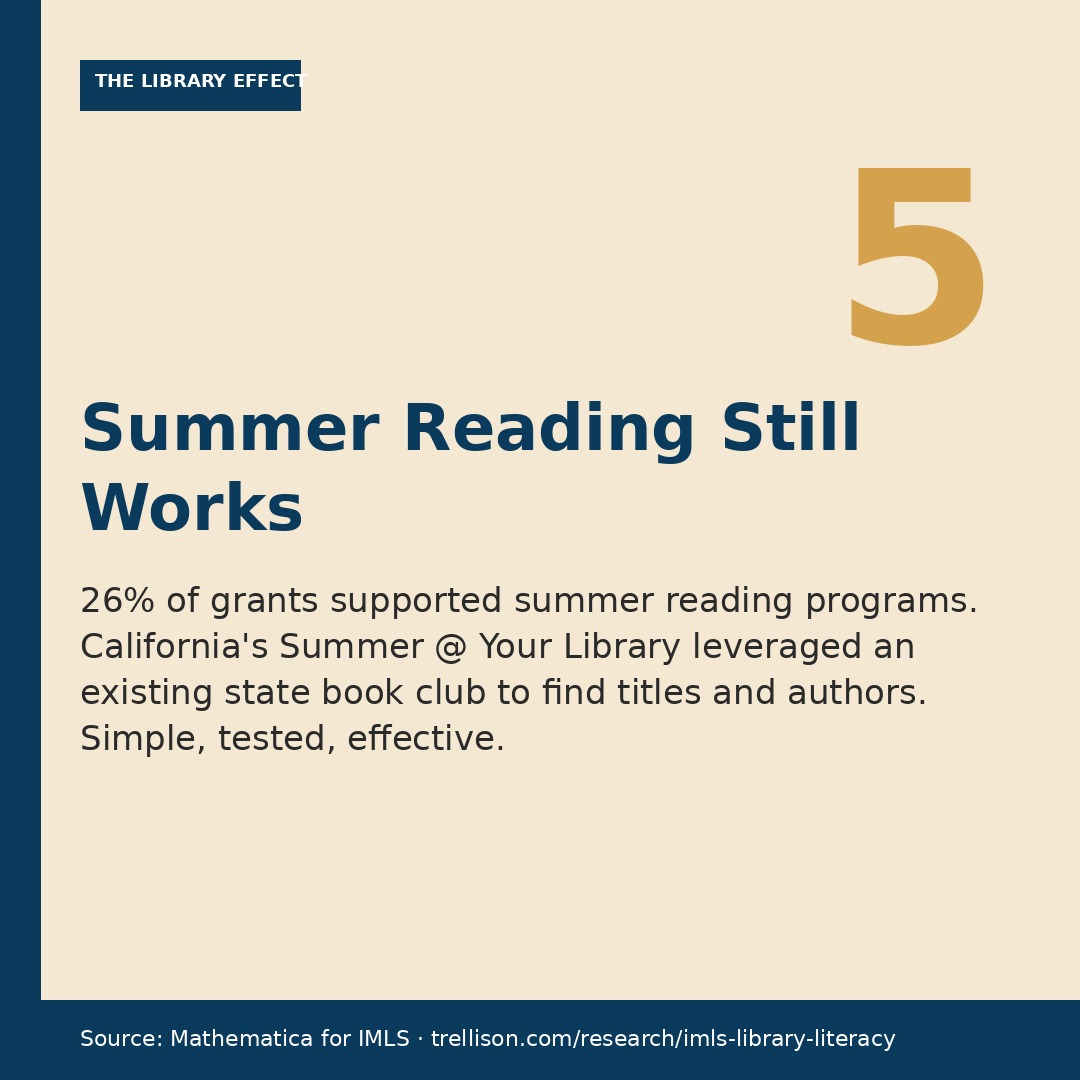
Summer Reading Still Works
26% of grants supported summer reading programs. California's Summer @ Your Library leveraged an existing state book club to find titles and authors. Simple, tested, effective.
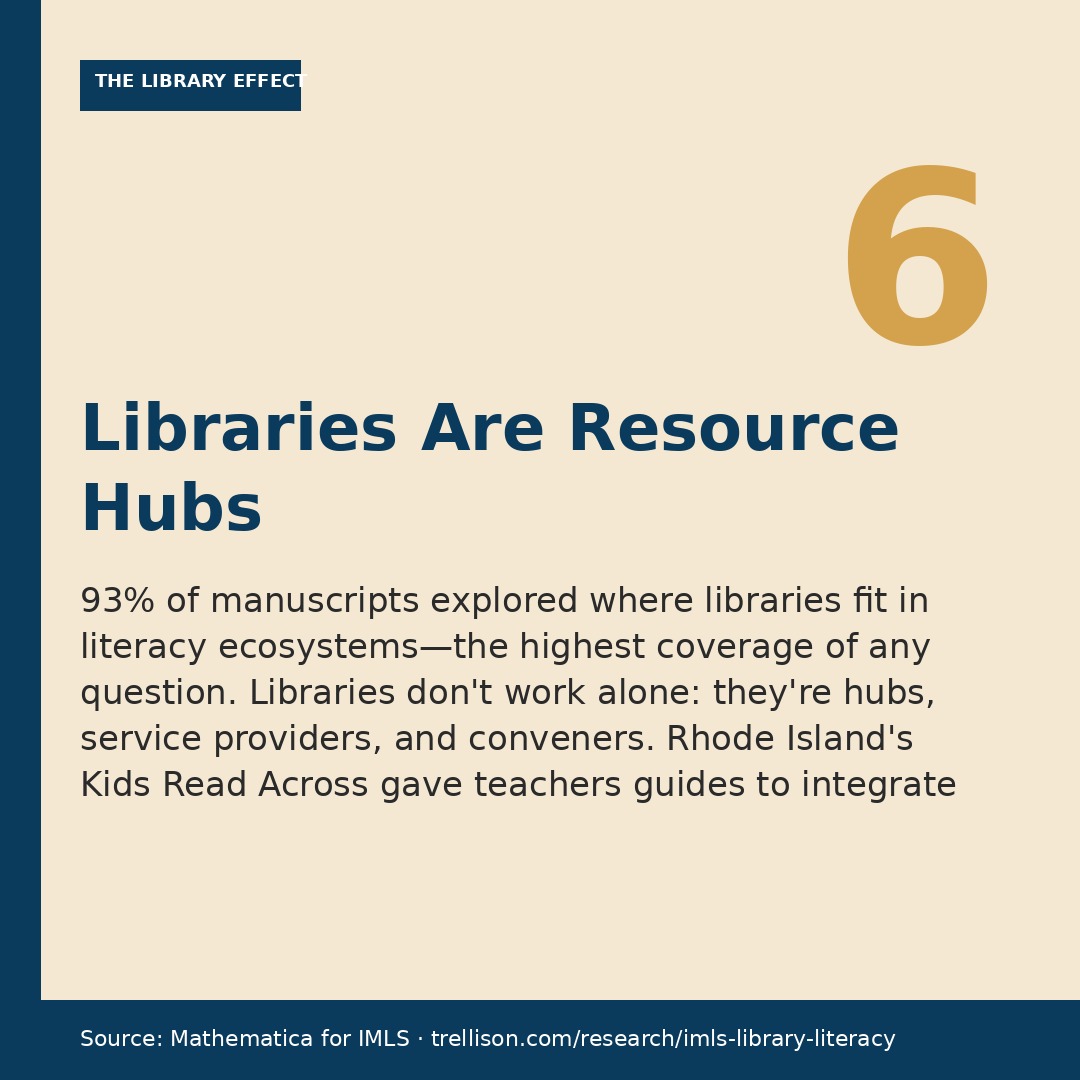
Libraries Are Resource Hubs
93% of manuscripts explored where libraries fit in literacy ecosystems—the highest coverage of any question. Libraries don't work alone: they're hubs, service providers, and conveners. Rhode Island's Kids Read Across gave teachers guides to integrate summer reading into classrooms.
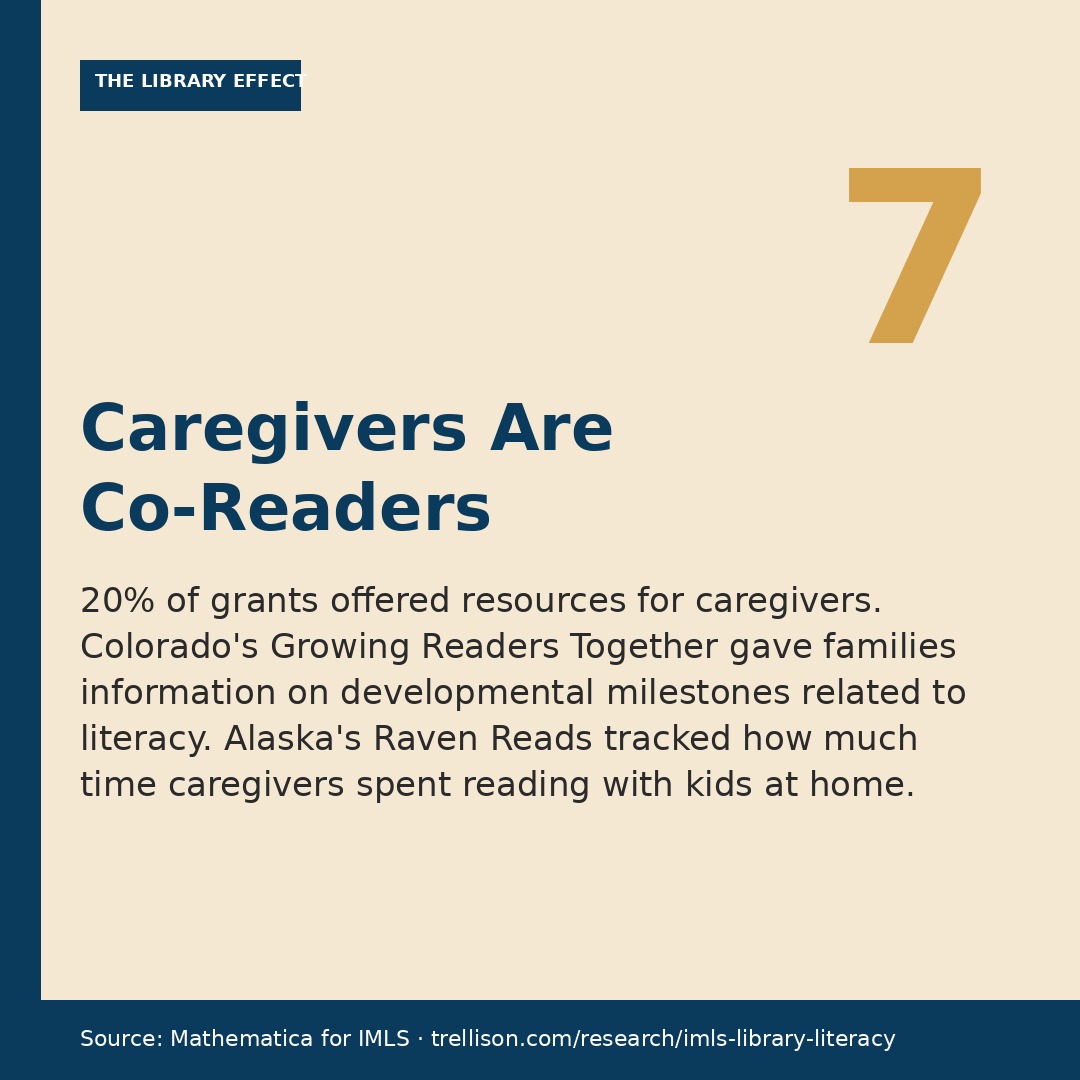
Caregivers Are Co-Readers
20% of grants offered resources for caregivers. Colorado's Growing Readers Together gave families information on developmental milestones related to literacy. Alaska's Raven Reads tracked how much time caregivers spent reading with kids at home. The library visit is a spark; home is the fire.
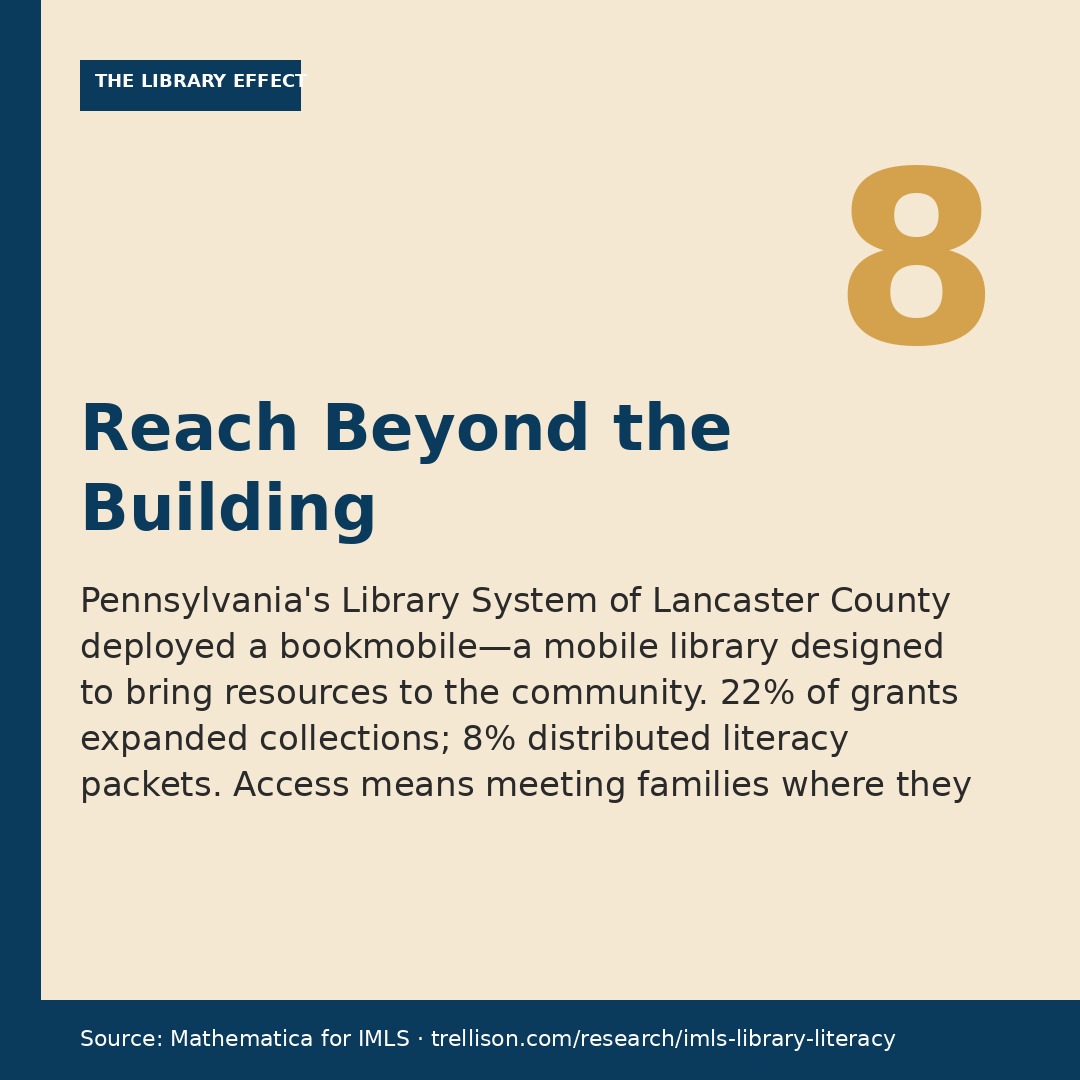
Reach Beyond the Building
Pennsylvania's Library System of Lancaster County deployed a bookmobile—a mobile library designed to bring resources to the community. 22% of grants expanded collections; 8% distributed literacy packets. Access means meeting families where they are.
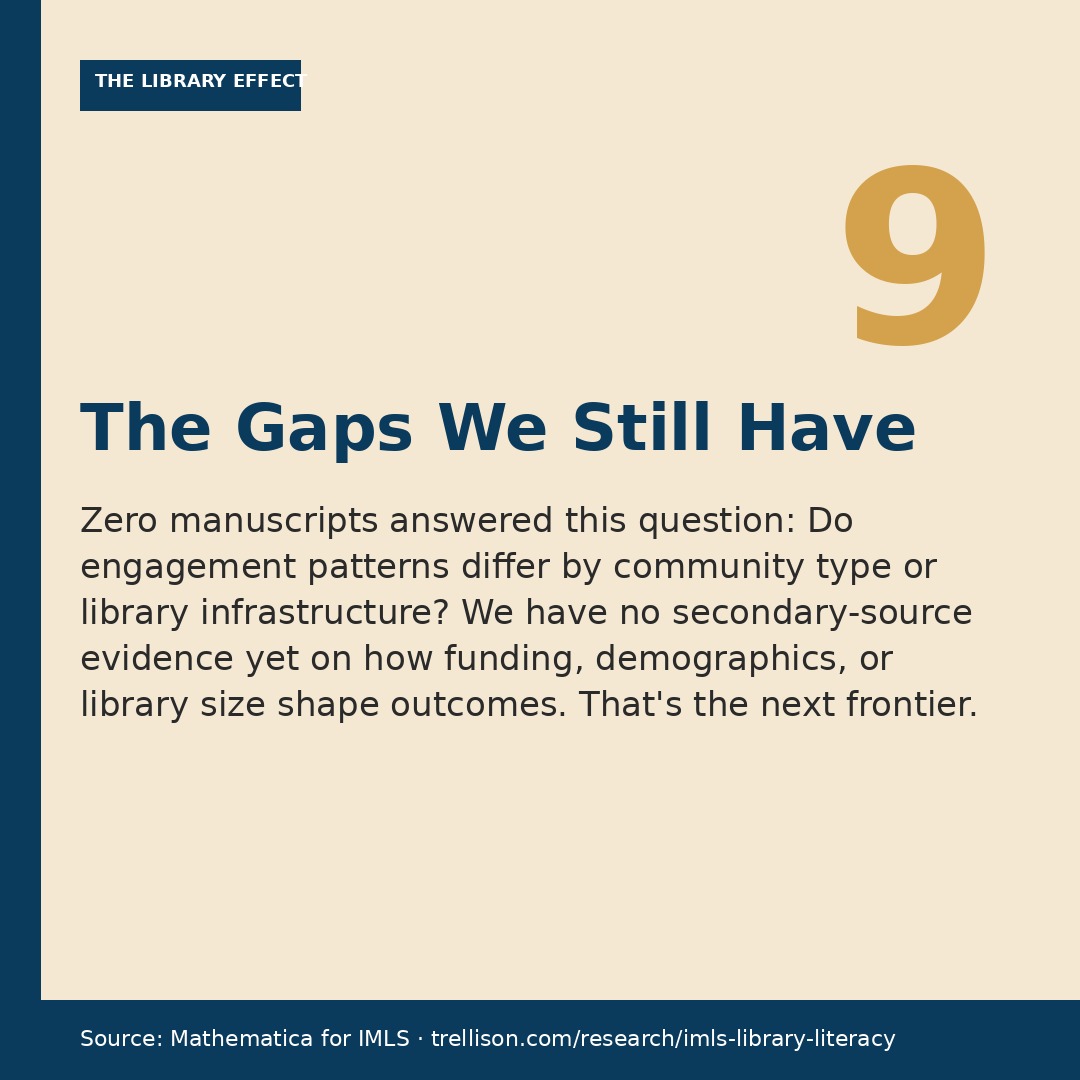
The Gaps We Still Have
Zero manuscripts answered this question: Do engagement patterns differ by community type or library infrastructure? We have no secondary-source evidence yet on how funding, demographics, or library size shape outcomes. That's the next frontier.
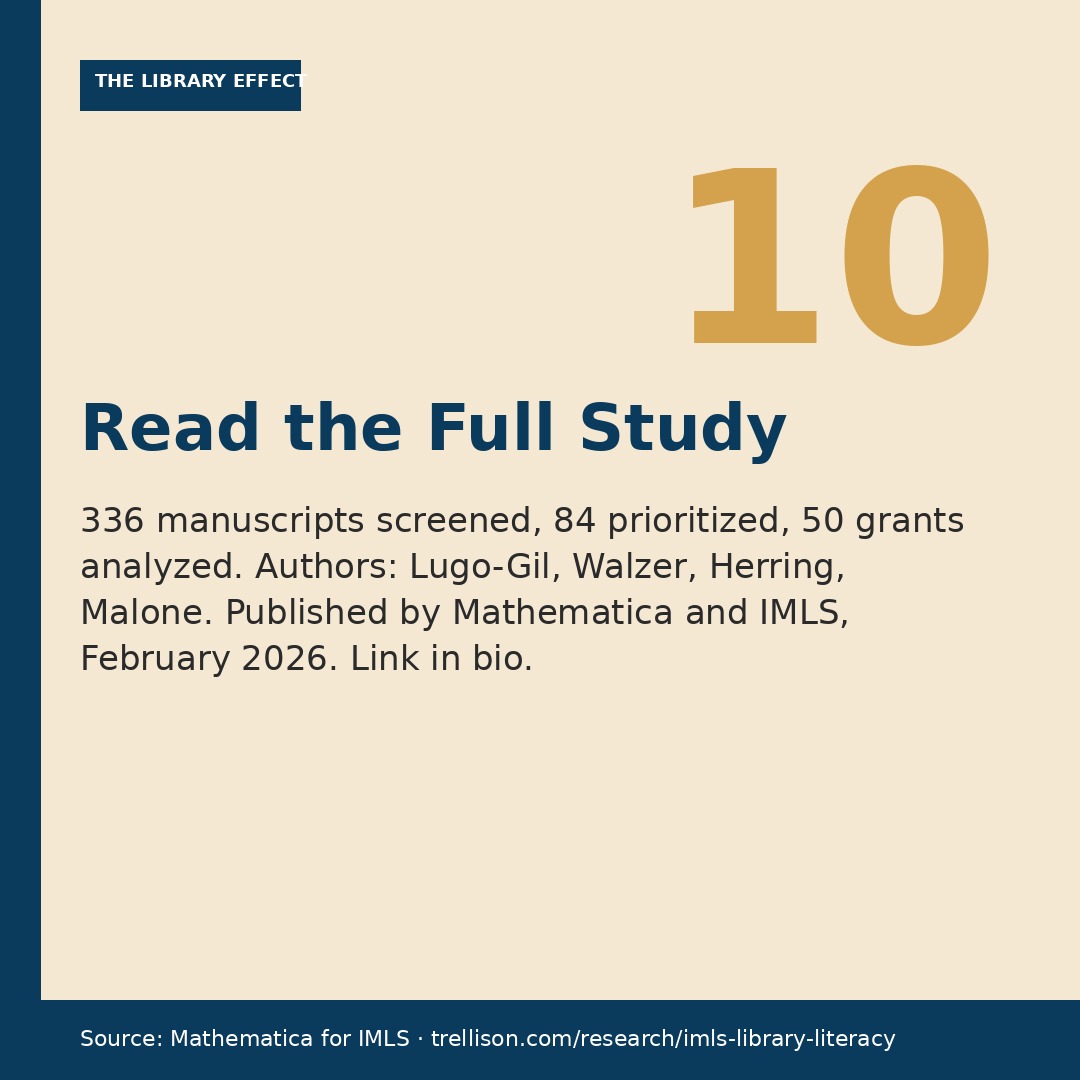
Read the Full Study
336 manuscripts screened, 84 prioritized, 50 grants analyzed. Authors: Lugo-Gil, Walzer, Herring, Malone. Published by Mathematica and IMLS, February 2026. Link in bio.
Facebook community post
Single post3358 chars
📚 If you're part of a library that runs storytime, summer reading, or early literacy programs—or if you're a parent who uses them—new research from Mathematica and the Institute of Museum and Library Services just gave us a clearer picture of what's working across the country.
Researchers screened 336 manuscripts and analyzed 50 library grants spanning 24 states and the years 2013–2024. They wanted to know: How do public libraries engage children in reading? What practices are grounded in evidence? And where are the gaps in what we know?
Here's what stood out:
🔹 32% of grants invested in training library staff—the single most common activity. Programs like Arizona's Building a New Generation of Readers gave librarians the opportunity to complete an Early Childhood literacy certificate. Skilled, trained staff are the backbone of effective programming.
🔹 26% supported summer reading programs. California's Summer @ Your Library tapped into an existing state book club to source titles and authors. Rhode Island's Kids Read Across provided resource guides so teachers could weave summer reading into classroom lessons.
🔹 20% of grants offered resources for caregivers—because reading doesn't stop at the library door. Colorado's Growing Readers Together gave families developmental milestone guides. Alaska's Raven Reads tracked how much time caregivers spent reading with their kids at home. Georgia's Take 5 surveyed caregivers about reading readiness.
🔹 Libraries play three roles in literacy ecosystems: resource hub, direct service provider, and convener of community organizations. 93% of manuscripts explored this question—the highest coverage of any research question in the study.
🔹 The 5 Every Child Ready to Read (ECRR) practices—Talking, Singing, Reading, Writing, Playing—showed up across programs, tailored by age. Massachusetts' Strength in Families matched songs and storytimes for infants, music and movement for toddlers, and play groups for preschoolers.
🔹 Only 6% of grants invested in infrastructure (like furniture or spaces). Washington's Stillaguamish Library Program used funds to buy age-appropriate, adaptable furniture for an early learning center. Pennsylvania's Library System of Lancaster County deployed a bookmobile to bring resources directly into neighborhoods.
And here's the gap: Zero manuscripts in the secondary research answered whether engagement patterns differ by library type, community demographics, or funding levels. We don't yet have evidence on *which* kids are reached and *how* infrastructure shapes outcomes. That's a question for future primary research.
This isn't a how-to guide—it's a landscape scan. It shows where the evidence is strong (ecosystem roles, best practices, caregiver engagement) and where we're still building the base (digital resources, equity across communities).
The report was authored by Julieta Lugo-Gil, Jennifer Walzer, Walter Herring, and Lizabeth Malone at Mathematica, funded by IMLS. You can read the full study here: https://www.imls.gov/research-evaluation/evaluations-research-studies/child-reading-literacy-and-public-libraries-secondary-research
If your library runs early literacy programs—or if you're a parent, teacher, or advocate who partners with one—this is worth a read. It's a snapshot of what we know, and a roadmap for what comes next.
Suggested groups to share with:
- Friends of Public Libraries
- Parents of Early Readers
- Library Advocates Network
- Early Childhood Educators and Librarians
- Public Library Directors Forum
- Every Child Ready to Read Community
- Summer Reading Program Coordinators
- Rural Library Support Groups
- Urban Library Partnerships
- State Library Association Pages
Source: "Child Reading Literacy and the Role of Public Libraries: A Review of Secondary Sources" by Mathematica for the Institute of Museum and Library Services (IMLS), 2026-03-23.
Download the full report (PDF) · IMLS publication page
Download the full report (PDF) · IMLS publication page
This publication is authored by Mathematica. The views expressed in this publication do not necessarily reflect the views or policies of the Institute of Museum and Library Services or the U.S. Government.